

Institute for Robotics Systems Established at HSE University
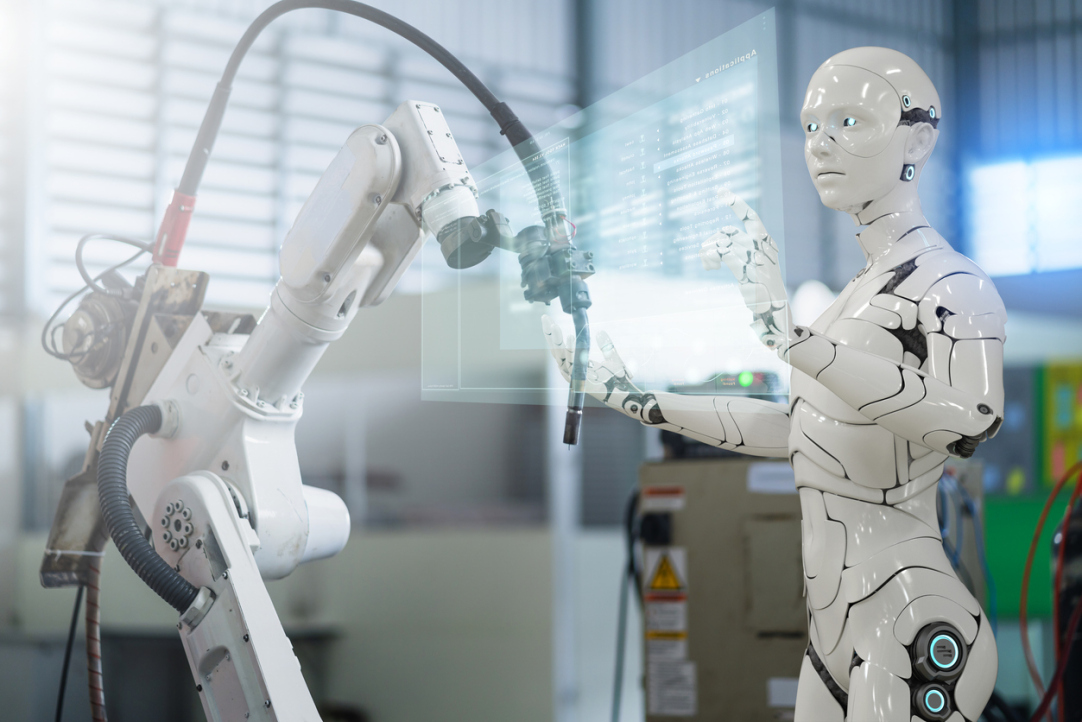
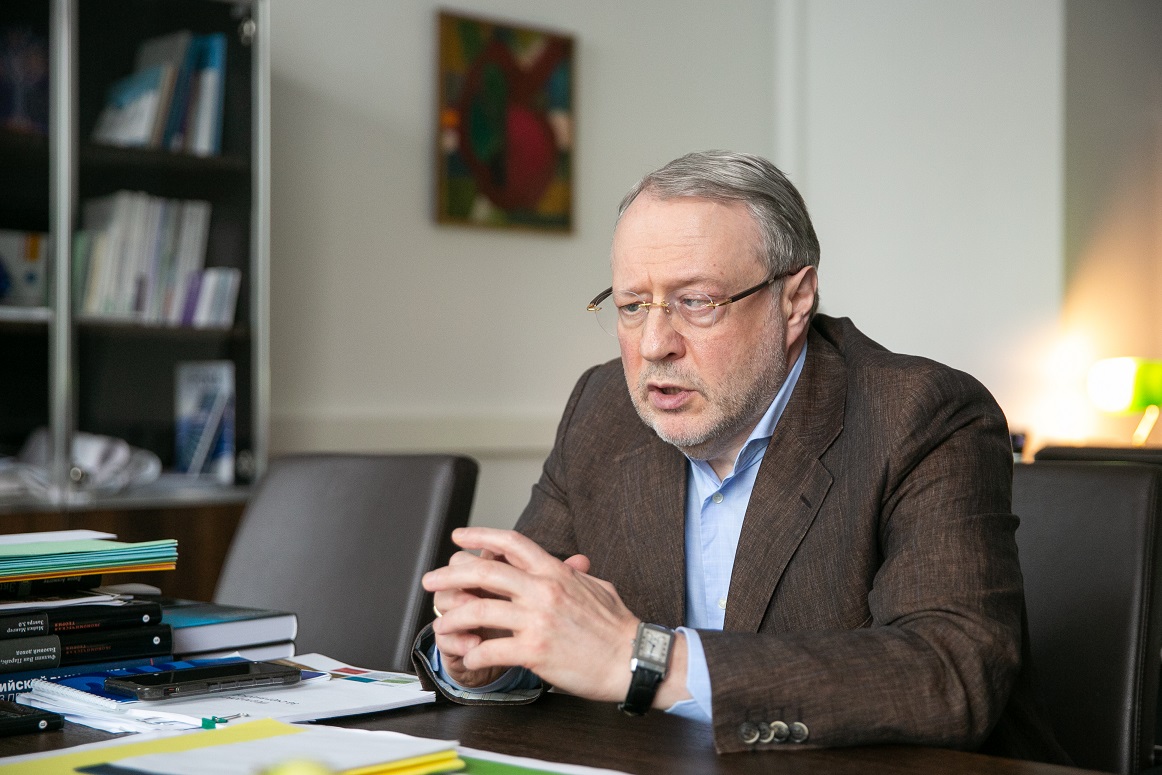
As decided by the HSE University Academic Council, a new Institute for Robotics Systems will be established at HSE, and with a strong fundamental base. It will cooperate with relevant departments across the university and engage students and doctoral candidates in research and development (R&D). First Vice Rector of HSE University and Director of the Institute for Statistical Studies and Economics of Knowledge, Leonid Gokhberg, discussed the expected practical results and the framework for cooperation with an industrial partner.
— Leonid Markovich, what inspired the creation of the institute?
— The current development of HSE University involves pioneering fundamentally new areas that contribute to our country's technological leadership. Establishing the AI and Digital Science Institute and then the Telecommunications Research Institute were important milestones. Creating the Institute for Robotics Systems is the next step.
The need to integrate robotics into the economy has been emphasised by Russian President Vladimir Putin. Robotics features prominently in the Strategy of Scientific and Technological Development, which highlights comprehensive technologies that will define the economy and key industries for the next 10–15 years.
We have included plans for the institute in the next implementation stage of our recently approved Priority 2030 programme.
— Why is it called the Institute for Robotics Systems, not just Robotics?
— A robotics system encompasses a wide range of technologies, including artificial intelligence, computer vision, and mechatronics. A robot must be able to move, perform various functions, learn, and provide feedback. This requires developing electric motors, batteries, specialised coatings, and devices that mimic the human brain, vision, and joints.
— The Strategy of Scientific and Technological Development mentions partnerships between universities implementing comprehensive technology development programs and major technology companies. Does the Institute for Robotics Systems have an industrial partner?
— Yes, our strategic partner is EFKO Group—one of Europe's largest agro-industrial corporations and a leader in high technology. EFKO carries out world-class R&D at the scientific frontier in biotechnology, unmanned systems, energy storage, mobile and anthropomorphic robotics, and more.
HSE University and EFKO have already launched several joint projects that leverage our expertise in foresight and big data mining using the iFORA system. These studies focus on Russia’s long-term development prospects, the emergence of technological start-ups, cultural trends, and other areas.
Furthermore, EFKO is collaborating with HSE on a unique project to identify and support students with high creative potential. Together, we plan to form and develop implementation teams with the company's mentors and our students—future leaders in business innovation.
— What practical results are expected from the cooperation between the new institute and EFKO?
— Recently, the Russian Ministry of Education and Science launched an initiative to create research and production enterprises capable of ensuring a full cycle for achieving technological sovereignty—from applied R&D to manufacturing product prototypes.
In our case, an expected initial result is producing prototypes of anthropomorphic robots for use in logistics, manufacturing, the service sector, and beyond. Subsequently, the company plans to oversee serial production.
— Do you plan to launch educational programmes at the institute?
— Absolutely, but not immediately. At this stage, we plan to actively involve students and doctoral candidates in the institute's R&D activities. This aligns with HSE University’s traditions, which include a strong fundamental base and extensive cooperation with relevant departments such as the Faculty of Computer Science, MIEM, the AI and Digital Science Institute, the Institute for Cognitive Neuroscience.
— Who will join the staff?
— We plan to recruit leading scientists, both from within HSE University and from the broader research community.
— When will the Institute for Robotics Systems be fully operational?
— We intend to achieve this within a year.
Participation in the Russian Ministry of Education and Science's research and production enterprise programme will be a major milestone, accelerating the institute's establishment, its entry into serious research, and the creation of technologies with confirmed commercial potential for our industrial partner.

See also:

HSE Researchers Present Study on Neural Network Robustness in Video Analysis at ChinaMM 2026
Researchers from HSE University presented a study at the international ChinaMM 2026 conference on how video transmission distortions affect the performance of neural networks. The authors proposed a new approach to testing the robustness of such models under conditions that closely resemble the real-world use of video services.
HSE University to Develop Predictive Analytics System for Icebreaker Motors
Industrial automation is one of the key applications of artificial intelligence. A predictive analytics system for large electric motors is among the solutions being developed for the industry as part of HSE University’s Strategic Technological Project ‘Multi-Agent Platform of AI Solutions for Industry-Specific Tasks.’ What is predictive analytics, how can it improve the operation of electric motors, and what specialists joined forces to develop this technology? Anton Zarubin, Dean of the School of Computer Science, Physics, and Technology at HSE University–St Petersburg and the project development coordinator, explains in this interview with the HSE News Service.
Scientific Expedition to Hainan: HSE Scientists Organise Conference on Statistical AI in China
The Statistical AI Conference was held in Sanya, Hainan Island, China, from 24 to 28 August 2026. The international event brought together leading experts in statistics, machine learning, and applied AI. Alexey Naumov, Director of the AI and Digital Science Institute at the HSE Faculty of Computer Science, and Sergey Samsonov, Head of the International Laboratory of Stochastic Algorithms and High-Dimensional Inference, were among the conference organisers.
5th Fall into ML Conference to Bring Together Leading AI Researchers
The AI and Digital Science Institute at the HSE Faculty of Computer Science invites researchers, developers and everyone shaping the future of technology to the fifth, anniversary edition of the Fall into Machine Learning conference (Fall into ML 2026). The event will take place on October 23–24, 2026, at the HSE Cultural Centre in Moscow and will become the key meeting point for Russia’s AI community.
HSE University Expands Cooperation with Malaysia in Technology Foresight
HSE University researchers will take part in a study of the future of engineering education in Malaysia, while the Malaysian Industry-Government Group for High Technology (MIGHT) will use the iFORA big-data analysis system to validate the findings of its foresight research. These are the outcomes of a visit by HSE representatives to Kuala Lumpur.
Scientists Train Neural Network to Generate Process Plans from 3D Models
Researchers at the HSE FCS AI and Digital Science Institute have developed CAD2TechSpec, a framework that converts 3D models of mechanical parts into machining process plans—step-by-step instructions for machine tools. The solution aims to reduce the time required for the design and preparation of technical process documentation in mechanical engineering, aircraft manufacturing, and other high-tech industries. The study findings have been published in PeerJ Computer Science.
Biologists Discover 'Molecular Fingerprint' of Preeclampsia
Researchers at HSE University employed a new method to model hypoxia in placental cells during pregnancies complicated by preeclampsia and identified molecular markers of tissue hypoxia. Since hypoxia is one of the key mechanisms underlying preeclampsia, these findings are important for a more accurate and timely diagnosis of the disease and for the development of effective treatment methods. The paper has been published in Placenta.
Laboratory of Future Networks: HSE Telecommunications Research Institute Develops 5G/6G Research Testbed
The 5G/6G testbed at the HSE Telecommunications Research Institute is becoming a research platform, an educational laboratory, and a foundation for developing new software components for future networks. It makes it possible not only to observe how a mobile network operates, but also to change its operating conditions and measure the results: data-transmission speed, latency, errors, radio-resource utilisation, and other parameters. Based on the testbed, researchers plan to develop MIMO, O-RAN, xApp, and IAB technologies, as well as experiment with artificial intelligence.
‘Hedgehog’ Versus ‘Relatives’: Researchers Measure How the Brain Responds to Unexpected Words During Natural Speech
Russian neurophysiologists, including researchers from HSE University, have demonstrated the feasibility of using event-related fields (ERFs) to study brain activity during natural speech perception. The researchers showed that this approach can be applied not only to individual words but also to continuous speech. Their findings indicate that words whose meanings differ significantly from the preceding context require longer processing times. The study also reveals that the brain processes function words in two stages: first, it identifies their grammatical role and then uses this information to predict the next word. The study has been published in Frontiers in Human Neuroscience.
Hybrid Intelligence: Competencies in the Age of AI Discussed at Technoprom-2026
Artificial intelligence is not creating new professions, but rather transforming the nature of existing ones. This was the conclusion reached by participants in the panel session ‘Hybrid Intelligence: Digital and Human Drivers of Development,’ organised by the Institute for Statistical Studies and Economics of Knowledge (ISSEK) at HSE University as part of the 13th International Forum of Technological Development (Technoprom-2026). The experts discussed how the nature of work is changing, which skills are becoming increasingly sought after, and what prevents companies from fully capitalising on new technologies.